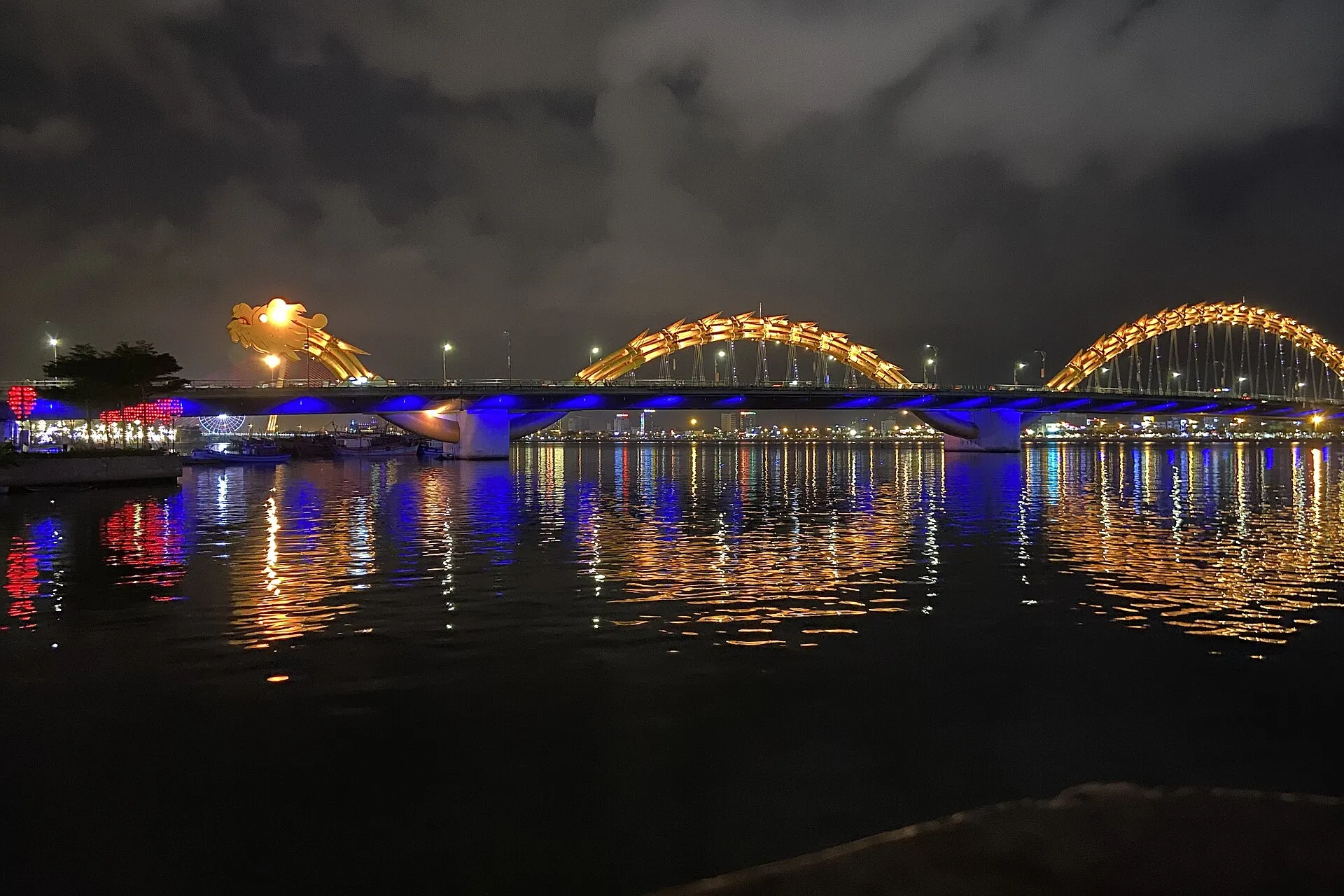
The Charming Da Nang Show · Da Nang, Vietnam
An Apsara Steps Down from the Stone
In the sandstone of My Son, a dancer has stood carved and still for a thousand years. For one evening she steps down: the Cham apsara comes alive in silk, ao dai sleeves arc like the tide, a single-string dan bau bends a note that seems to come from the sea itself, and the whole coastal city of Da Nang rises in light behind the dancers. Here's what the show puts on stage, movement by movement, and how it fits an evening by the water.
Ⅰ · Stone
From stone to stage to sea
From stone to stage to sea
The apsara who steps down from the temple
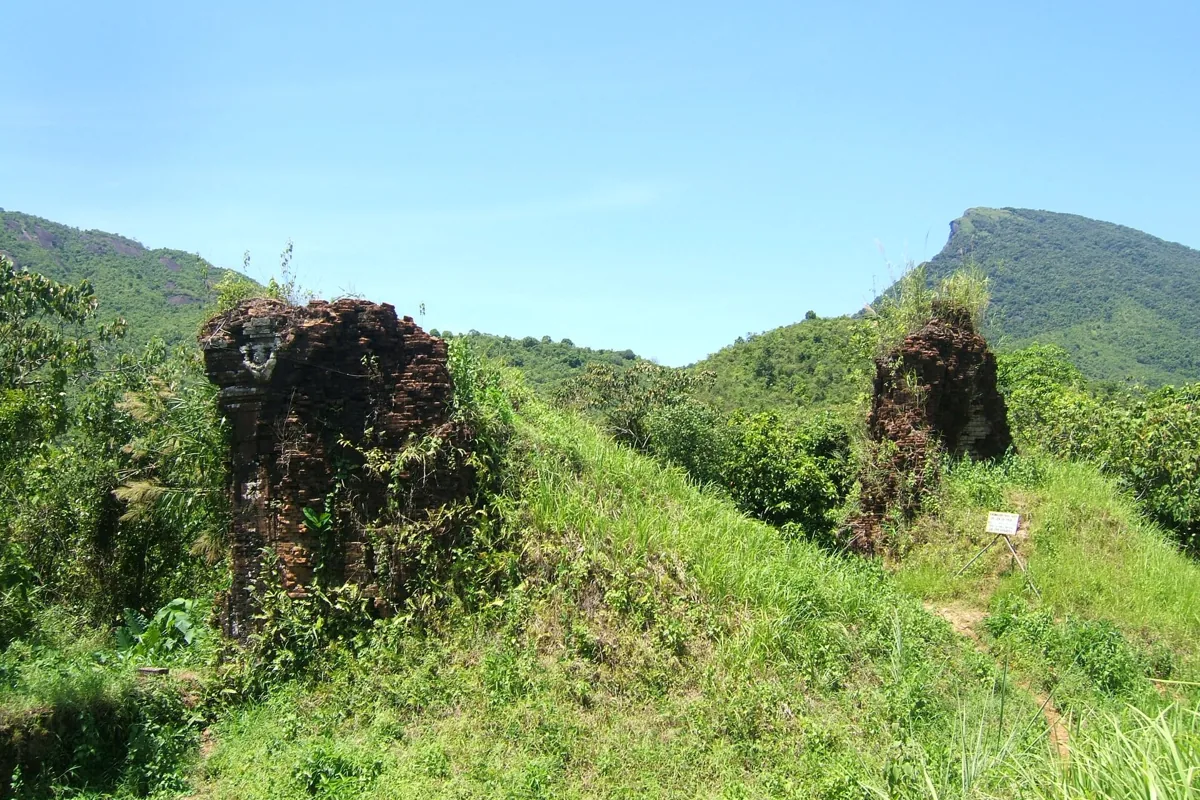
Before Da Nang was a beach city it was the coast of Champa, the Hindu-Buddhist kingdom that ruled central Vietnam for more than a thousand years and left brick towers at My Son and a wealth of carved sandstone. On those reliefs dances the apsara — a celestial dancer, frozen mid-movement in the stone. The Charming Da Nang Show begins there: its signature Cham apsara dance is a modern reconstruction of that temple art, the still figure on the relief set moving again in silk and lamplight. It is the thread that runs through the whole evening — the deep past of the coast, brought up onto a stage.
A show staged as four movements
This isn't a museum piece but a modern, fast-moving spectacle: around eleven acts arranged into four movements — a mysterious opening in the Champa world, an ao dai sequence, a lotus dance, and a bright Spring-festival finale. Between them come Vietnamese folk music and dance, acrobatics, and a projected cityscape of Da Nang itself — the Dragon Bridge, the Han River, the sea — rising in light behind the performers. It runs about sixty to seventy minutes and it is entirely non-verbal, so there's no language barrier: the story is told in movement, music and colour.
And then the city by the water
The show is only the middle of a good Da Nang evening. It sits in the Hai Chau district a few minutes from the centre, near the Museum of Cham Sculpture — the world's largest collection of Cham art, and the real-world companion to the apsara you've just watched dance. Step back out and the coastal city is waiting: the Dragon Bridge that breathes fire on weekends, the long sweep of My Khe Beach, and the Marble Mountains just south. Stone, stage, then sea — that's the shape of the night the show sits at the heart of.
Ⅱ · Stage
The evening, movement by movement
The evening, movement by movement
The show unfolds in four movements, threaded with folk dance and acrobatics. Here are the moments to watch for as the story climbs from the ancient coast to the modern city.
Mysterious Champa
The opening: the Cham world of a thousand years ago, all sandstone and shadow, with the apsara dance at its heart — the celestial dancer of the My Son reliefs brought to life in silk. Slow, ceremonial and otherworldly, it sets the deep-past tone the whole evening builds from, and it's the number most directly rooted in real Champa temple art.
The ao dai
A change of era and mood: the ao dai, Vietnam's flowing national dress, worn in a sequence of graceful ensemble dance. Where the Champa opening is ancient and hieratic, this is unmistakably Vietnamese and closer to now — the long panels and conical silhouettes moving in unison, one of the show's most photographed passages.
The lotus dance
The lotus — Vietnam's national flower and a Buddhist emblem of purity — gives the show its most lyrical movement: dancers opening and folding like petals, set to traditional music that often carries the bent, plaintive note of the single-string dan bau. It's the quiet, beautiful centre of the evening before the finale lifts the pace.
The Spring-festival finale
The close is bright and celebratory: a Spring-festival movement of massed colour, folk dance and acrobatics, with the projected Da Nang cityscape — the Dragon Bridge, the river, the sea — rising in light behind the full company. It's the loudest, most spectacular passage of the night, the coast's ancient story handed forward to the modern city.
Folk dance, music and acrobatics
Running between and through the four movements are the connective numbers: Vietnamese folk music and dance drawn from across the country, acrobatic set-pieces, and the live traditional sound led by instruments like the dan bau. These are the evening's colour and energy — the quick, skilful pieces that keep a sixty-to-seventy-minute show moving between its bigger set dances.
The four movements
The four movements
| Movement | What you see | Mood | Note |
|---|---|---|---|
| Mysterious Champa | The Cham apsara dance, silk and sandstone-lit shadow | Ancient, ceremonial, otherworldly | Rooted in real My Son temple art |
| The ao dai | Ensemble dance in Vietnam's flowing national dress | Graceful, unmistakably Vietnamese | One of the most photographed passages |
| The lotus dance | Dancers opening like petals to the dan bau | Lyrical, quiet, the evening's still centre | The lotus is Vietnam's national flower |
| Spring-festival finale | Massed folk dance, acrobatics, projected cityscape | Bright, celebratory, full-company | The Da Nang skyline rises in light behind |
Know before you book
The show is straightforward to book, but a few things are worth knowing before you choose your date and plan the evening around it.
One early performance a day
The show runs a single performance starting at 17:00, not a choice of evening times. That early curtain is a feature, not a limit — it frees the later evening for the beach, the river and the Dragon Bridge — but it does mean planning your afternoon so you're at the theatre in Hai Chau, checked in by 16:45, rather than treating the show as a late-night option.
It's non-verbal — no Vietnamese needed
The show tells its story through dance, music, costume and projection, not dialogue, so there's no language barrier and visitors of any nationality follow it easily. That makes it one of the more accessible evening experiences in Da Nang for international travellers and for families — the spectacle carries the meaning, whether or not you know the Cham backstory.
The Cham thread pays off next door
The show's apsara dances come from the same Champa temple art housed, in stone, at the Da Nang Museum of Cham Sculpture a few minutes away — the largest Cham collection in the world. Seeing the carved dancers first, or after, turns the show from a standalone spectacle into the living half of a story whose other half is on the museum's plinths. Pairing the two is the single best way to deepen the evening.
Check the seat and the date
The theatre seats a limited house, and in peak months and around Vietnamese holidays it fills days ahead, best seats first. Booking online holds your date and your place; the live price and any seat options are shown in the widget in your own currency before you pay. Free cancellation up to 24 hours ahead, per the listing, keeps the plan flexible if your Da Nang itinerary shifts.
What kind of show is this?
What kind of show is this?
Two things catch first-time visitors out, and both are worth settling before you book so the evening matches what you're picturing.
An early-evening theatre spectacle
This is a single sixty-to-seventy-minute indoor performance starting at 17:00, not a day tour, a dinner show or a late-night cabaret. It's a modern staged spectacle of Cham apsara, ao dai and folk dance with acrobatics and projection — cultural and family-friendly rather than a bar-and-drinks night. Knowing that shapes your evening: the show is the fixed early point, and the beach, dinner and Dragon Bridge fit around it afterward.
Where the theatre is
The Charming Da Nang Show Theatre is in the Hai Chau district, behind Metro Market and about five minutes from the city centre — not out at the beach resorts. That central spot is a bonus: it sits near the Museum of Cham Sculpture and a short ride from the Dragon Bridge and the riverfront, so pairing the show with the city's other sights is easy. Check the venue and the 16:45 check-in so you arrive at the right place with time to spare.
The order of the evening
A Charming Da Nang Show evening runs to a set early rhythm — check-in, curtain at five, and the coastal city waiting outside afterward. Here's how the hours fall.
- 01
Check in from 16:45
The theatre asks guests to arrive from 16:45, ahead of the 17:00 start. The venue is the Charming Da Nang Show Theatre in the Hai Chau district, behind Metro Market and about five minutes from the centre — close enough that you can spend the afternoon in the city and still make the early curtain. Come with a little time in hand to find your seat and settle before the lights go down.
- 02
The show, in four movements
At 17:00 the performance opens and runs about sixty to seventy minutes without interval: the mysterious Champa opening, the ao dai sequence, the lotus dance and the Spring-festival finale, threaded with folk music, acrobatics and the projected Da Nang cityscape. It's non-verbal and briskly paced — around eleven acts building from the quiet, ancient Cham world to a bright, full-company close.
- 03
Out into the coastal evening
An early finish is the show's quiet advantage: you're back out into Da Nang with the whole evening ahead. The Museum of Cham Sculpture is minutes away, the riverside promenade and the Dragon Bridge are a short ride, and dinner by the Han River or out at My Khe Beach is entirely doable. Where a late-night show ends the day, this one sets it up.
- 04
The Dragon Bridge, if it's the weekend
Time the show for a Friday, Saturday or Sunday and you can walk out into the city's other headline act: the Dragon Bridge breathes real fire and water at 21:00 on weekend nights. It's a natural second half to the evening — the Cham past on stage at five, the modern city's showpiece over the river a few hours later — with a beach or a riverside dinner in between.
Ⅲ · Sea
The Cham coast, in pictures
The apsara in stone, the ao dai, the Dragon Bridge after dark and the Cham towers of My Son that the show reaches back to.
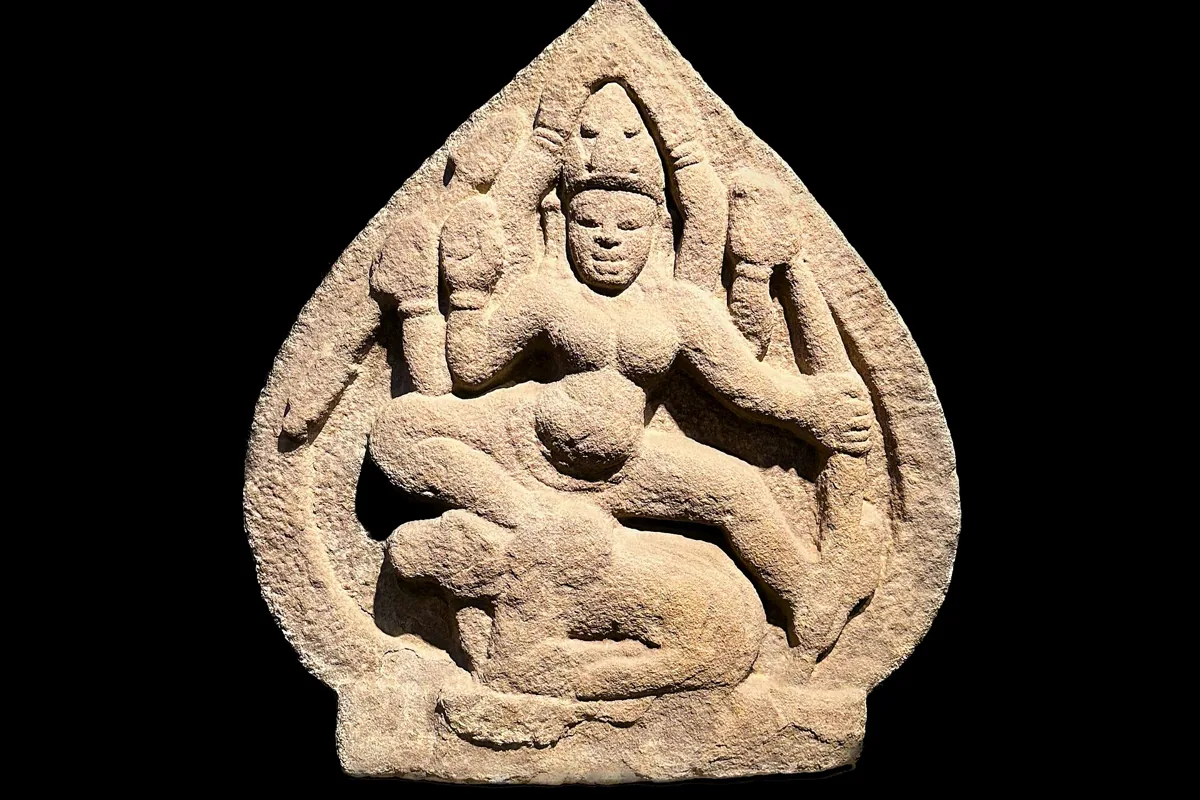
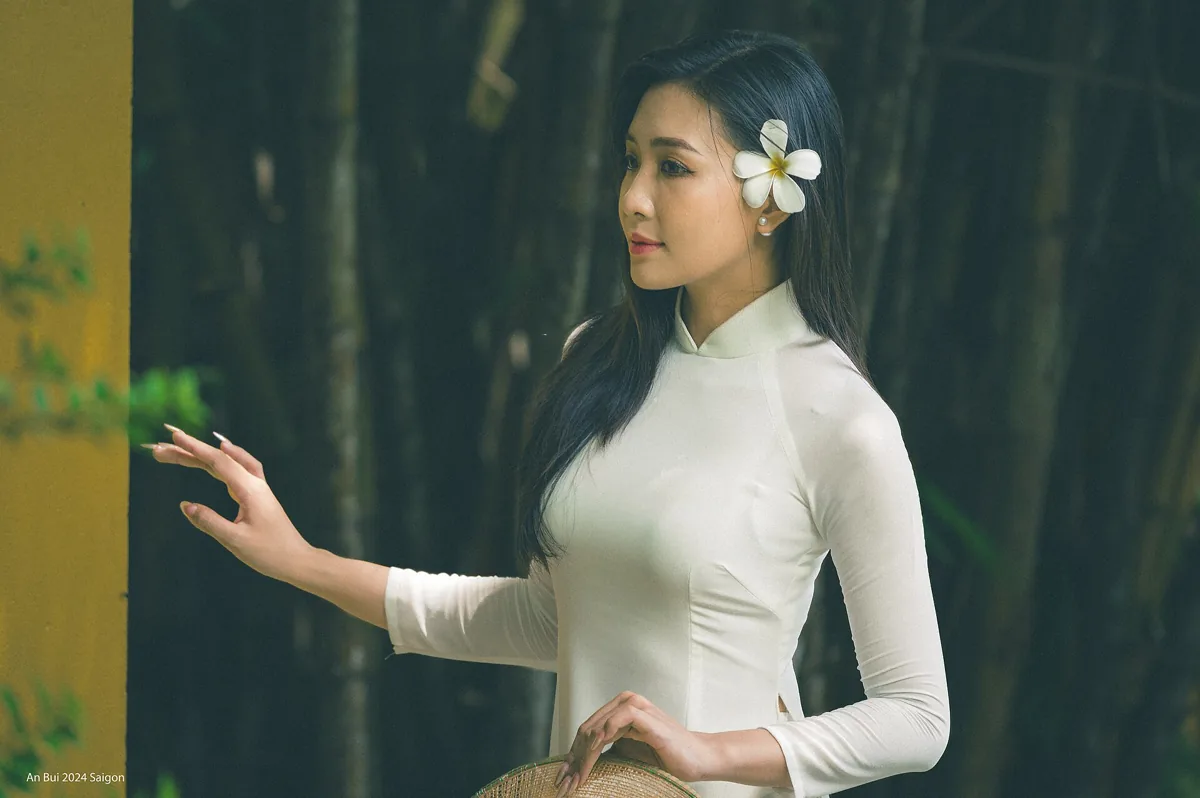
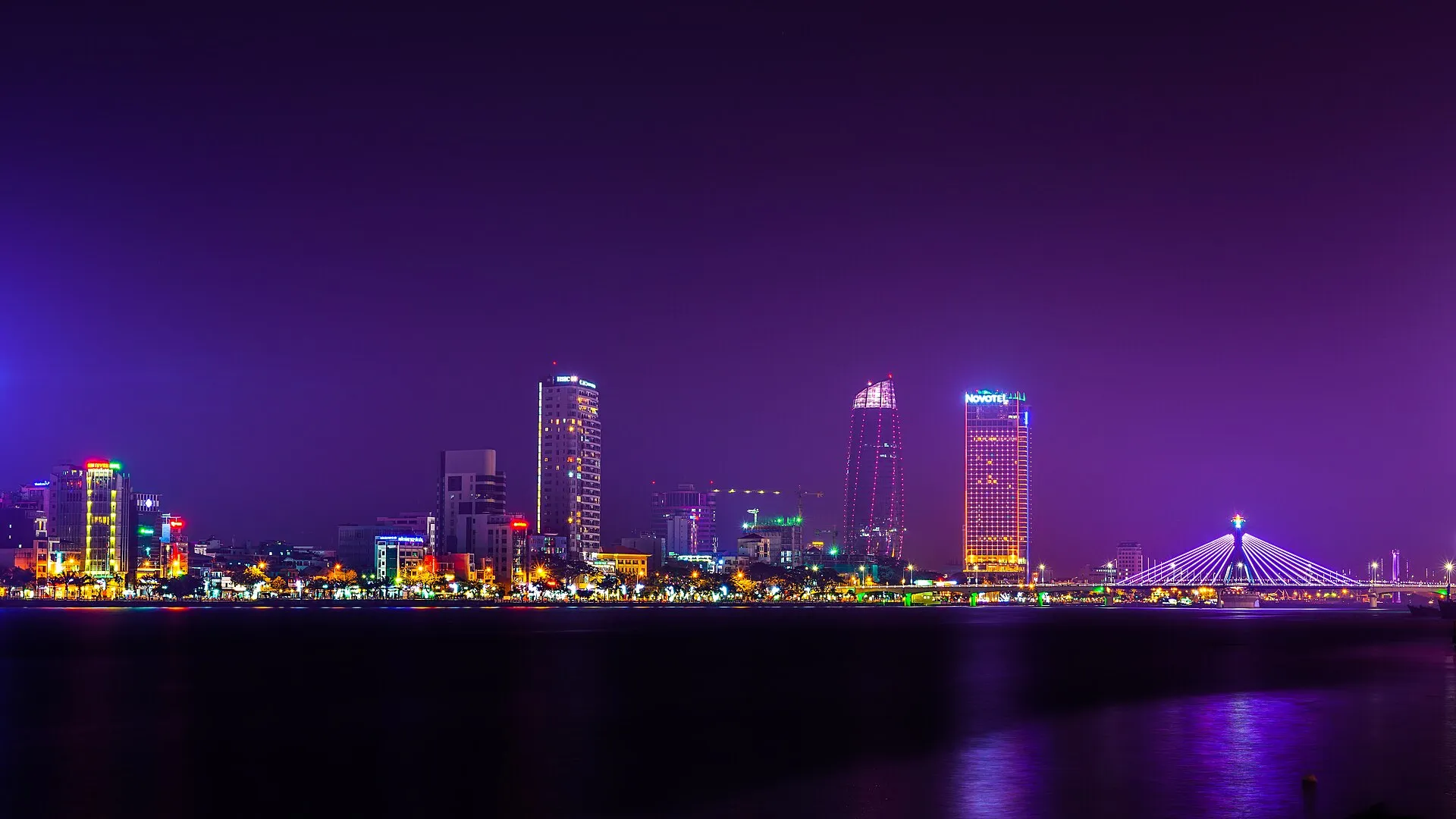
The show runs year-round indoors, but Da Nang's coastal seasons and the Vietnamese holiday calendar change how far ahead you need to book and how the wider evening feels.
Dry season (Feb–Aug)
Da Nang's long dry season is peak beach weather and peak travel: warm, mostly rainless evenings, My Khe at its best, and the biggest international crowds. Show seats and the good ones go first in these months, so book ahead. It's the easiest time to build the full evening — show at five, beach or riverside dinner after, Dragon Bridge fire on the weekend — around reliably fine weather.
Vietnamese holidays (Tet, Apr 30–May 1)
Around Tet, the Lunar New Year, and the late-April reunification and May Day holidays, domestic travel surges and Da Nang fills. The show is a popular night out for Vietnamese visitors too, so seats can sell out entirely — book as early as you can, and expect the whole city, riverside and Dragon Bridge especially, to be lively and packed.
Wet season (Sep–Dec)
The autumn months bring central Vietnam's heaviest rain and the odd storm — but the show is an indoor early-evening performance, so it runs regardless and makes an ideal wet-weather plan when the beach is out. Crowds thin, seats are easier on shorter notice, and a dry theatre at five o'clock is a welcome fixed point in an unsettled day.
January
The tail of the cooler, greyer stretch: pleasant temperatures, fewer crowds than the dry-season peak, and generally easy booking. The sea can be cool and choppy for swimming, which makes an indoor cultural evening all the more appealing. A good, quiet month to see the show and pair it with the Cham museum without the high-season rush.
Charming Da Nang Show tickets
Find a Charming Da Nang Show evening for your dates
Every option below is bookable through GetYourGuide, with live availability and the final price shown in your own currency before you pay — the Charming Da Nang Show and the evening experiences around it, from the Cham museum to the Dragon Bridge fire show.
Planning your evening in Da Nang
Planning your evening in Da Nang
Build the day around the 17:00 start
The show's early curtain is the fixed point of the evening, so plan backwards from it. Spend the afternoon in the city or down the coast, but leave time to reach the Charming Da Nang Show Theatre in Hai Chau and check in by 16:45. Because it finishes early, you don't need to hold the rest of the night empty — the show sets up the evening rather than closing it.
Pair it with the Museum of Cham Sculpture
The single best add-on is a few minutes away: the Da Nang Museum of Cham Sculpture holds the world's largest collection of Cham art, including the carved apsara dancers the show brings to life. See it the same afternoon — before the show, so the stone dancers are fresh when the stage ones move, or after, to place what you've watched. It turns an hour's spectacle into a proper encounter with the Champa past.
Add the beach, the mountains or the bridge
Da Nang beyond the theatre is the reward for the early finish. My Khe Beach runs for kilometres just east of the city; the Marble Mountains, a cluster of limestone-and-marble hills with cave shrines, sit a short drive south; and the Dragon Bridge crosses the Han River in the centre. A classic day might run the Marble Mountains or My Son by day, the show at five, and a riverside dinner after — the coast's history and its beaches in one loop.
Time it for the Dragon Bridge fire show
If you can, choose a weekend date. On Friday, Saturday and Sunday nights the Dragon Bridge breathes fire and then water at around 21:00 — Da Nang's free, modern showpiece and a natural second act to the Cham show at five. Have dinner by the Han River in between and the two bookend the evening: the ancient coast on stage, the contemporary city over the water.
Book ahead and keep it flexible
The theatre seats a limited house and fills days ahead in peak season and around Vietnamese holidays, best seats first. Booking online holds your date and place, with the live price shown in your own currency before you pay. Choose the free-cancellation option, available up to 24 hours ahead per the listing, so a change of plan or a run of bad weather doesn't cost you the seat — useful in the autumn wet season especially.
Planning a Charming Da Nang Show evening
What the Charming Da Nang Show Puts on Stage
The eleven acts and four movements — from the Cham apsara opening to the Spring-festival finale — and the coast's story running through them.
Read more →THE CHAM LEGACYThe Champa Kingdom & the Museum of Cham Sculpture
Where the show's apsara comes from — the ancient coast of Champa, its temple art, and the world's largest Cham collection next door.
Read more →THE VIETNAMESE HALFAo Dai, the Dan Bau & Vietnamese Folk Dance
Beyond the Cham apsara, the show is a tour of Vietnamese tradition — the national dress, the single-string zither and the folk dances of the movements between.
Read more →THE VENUEThe Theatre, the 17:00 Start & Getting There
Finding the Charming Da Nang Show Theatre in Hai Chau, making the early curtain, and building the evening around it.
Read more →THE EVENINGBuilding a Da Nang Evening Around the Show
My Khe Beach, the Marble Mountains and the Dragon Bridge fire show — how the early curtain opens up a whole coastal night.
Read more →Questions
Charming Da Nang Show questions
What is the Charming Da Nang Show?
It's a modern indoor stage spectacle in Da Nang — around eleven acts across four movements, running about sixty to seventy minutes. It weaves together Cham apsara dance, the Vietnamese ao dai, a lotus dance and a Spring-festival finale, threaded with folk music, acrobatics and a projected cityscape of Da Nang itself. The apsara dance reaches back to the temple art of the ancient Champa kingdom, whose carvings fill the nearby Museum of Cham Sculpture. It's a cultural, family-friendly performance rather than a dinner show or a late-night cabaret.
What time does the show start, and how long is it?
There's a single performance a day, starting at 17:00, with check-in from 16:45. The show itself runs about sixty to seventy minutes without an interval. That early curtain is one of its advantages — it leaves the rest of the evening free for the beach, a riverside dinner or the Dragon Bridge — but it does mean planning your afternoon so you reach the theatre in Hai Chau and are seated in good time.
Do I need to understand Vietnamese to enjoy it?
No. The show is non-verbal — it tells its story through dance, music, costume and projected imagery rather than dialogue — so there's no language barrier and visitors of any nationality follow it easily. That makes it one of the more accessible evening experiences in Da Nang for international travellers and families. Knowing a little about the Cham apsara and the ao dai deepens it, but the spectacle carries the meaning on its own.
Where is the theatre, and how do I get there?
The show is staged at the Charming Da Nang Show Theatre in the Hai Chau district, behind Metro Market and about five minutes from the city centre — not out at the beach resorts. It's a short taxi or ride-hail trip from most central hotels, and it sits close to the Museum of Cham Sculpture and a short ride from the Dragon Bridge and the Han River promenade. Aim to arrive by the 16:45 check-in, and keep your booking confirmation on your phone.
How does it connect to the Cham history and the Museum of Cham Sculpture?
Closely. Da Nang was part of the ancient Champa kingdom, whose Hindu-Buddhist temples at My Son and elsewhere were carved with apsara — celestial dancers frozen in sandstone. The show's signature Cham dance brings that temple art to life. A few minutes away, the Da Nang Museum of Cham Sculpture holds the world's largest collection of Cham art, including those carved dancers, so pairing the museum with the show — either before or after — is the natural way to see the still and the moving versions of the same tradition.
What else can I do around the show in one evening?
Because it finishes early, the show sets up the evening rather than ending it. Within reach are the Museum of Cham Sculpture minutes away, the long sweep of My Khe Beach just east, the Marble Mountains a short drive south, and the Dragon Bridge over the Han River in the centre — which breathes fire and water at around 21:00 on Friday, Saturday and Sunday nights. A classic plan is the Marble Mountains or My Son by day, the show at five, dinner by the river, and the Dragon Bridge fire show to close a weekend evening.